
400-998-5282
专注多肽 服务科研
400-998-5282
专注多肽 服务科研

Dynorphins是一类阿片肽,由前体蛋白proynorphin产生。在被前蛋白转化酶2(PC2)切割后,释放出多种活性肽:强啡肽A、强啡肽B和α/β-新内啡肽。
编号:434503
CAS号:
单字母:Biotinyl-YGGFLRRIRPKLKWDNQ-OH
Dynorphins是一类阿片肽,由前体蛋白proynorphin产生。在被前蛋白转化酶2(PC2)切割后,释放出多种活性肽:强啡肽A、强啡肽B和α/β-新内啡肽。Dynorphins主要通过阿片受体(KOR)发挥作用,KOR是一种G蛋白偶联受体。强啡肽已被证明是疼痛反应的调节剂,参与药物成瘾和食欲控制。
Dynorphins are a class of opioid peptides that arise from the precursor protein prodynorphin. Upon cleavage by proprotein convertase 2 (PC2), multiple active peptides are released: dynorphin A, dynorphin B, and α/β-neo-endorphin. Dynorphins exert their effects primarily through the Κ-opioid receptor (KOR), a G-protein-coupled receptor. Dynorphin has been shown to be a modulator of pain response, involved in drug addiction and appetite control.
强啡肽的定义
强啡肽是一类内源性阿片肽,在大脑的许多不同部位产生,包括下丘脑、海马和脊髓,根据产生部位的不同,具有许多不同的生理作用。
Dynorphins are a class of endogenous opioid peptides produced in many different parts of the brain, including the hypothalamus, the hippocampus and the spinal cord, and have many different physiological actions, depending upon the site of production.
强啡肽的相关多肽
Dynorphins来源于前体蛋白proynorphin。当前强啡肽在加工过程中被前蛋白转化酶2(PC2)切割时,会释放出多种活性肽:强啡肽A、强啡肽B、“大强啡肽”和A/β-新强啡肽1。
Dynorphins arise from the precursor protein prodynorphin. When prodynorphin is cleaved during processing by proprotein convertase 2 (PC2), multiple active peptides are released: dynorphin A, dynorphin B, “big dynorphin” and a/ß-neo-endorphin【1】.
强啡肽的发现
Dynophin于20世纪70年代中期在阿片受体和内源性阿片肽领域最重要的研究人员之一Avram Goldstein的实验室中被发现。Goldstein与日本生物化学家Shinro Tachibana合作进行了分子鉴定,以进行纯化,M.Hunkapiller和L.Hood进行了微测序。
Dynophin was discovered in the mid 1970's in the laboratory of Avram Goldstein, one of the most important researchers in the field of opioid receptors and endogenous opioid peptides. The molecular identification was achieved by Goldstein in collaboration with the Japanese biochemist, Shinro Tachibana for purification, and M. Hunkapiller and L. Hood, who performed the microsequencing.
强啡肽的结构特点
从猪垂体中分离出一种4000道尔顿的强啡肽(也称为“大强啡肽”)。它有32个氨基酸,氨基末端有一个称为强啡肽a的十七肽(17个氨基酸序列),羧基末端有一种相关的十三肽(13个氨基酸序列,强啡肽B)。这两种肽由“处理信号”Lys-Arg【2】分离。
A 4,000-dalton dynorphin (also called the “Big dynorphin”) was isolated from porcine pituitary. It has 32 amino acids, with a heptadecapeptide (17 amino acid sequence), called dynorphin A, at its amino terminus and a related tridecapeptide (13 amino acid sequence), dynorphin B, at its carboxyl terminus. The two peptides are separated by the "processing signal" Lys-Arg【2】.
强啡肽的作用机制
Dynorphins主要通过一种名为?的G蛋白偶联受体发挥作用?-阿片受体(KOR)【3】。尽管KOR是所有强啡肽的主要受体,但这些肽确实对µ-阿片受体(MOR)、d-阿片受体、N-甲基-d-天冬氨酸(NMDA)型谷氨酸受体和缓激肽受体有一定的亲和力。不同的强啡肽在受体上表现出不同的受体选择性和效力。强啡肽和强啡肽A都比强啡肽B更有效、更具选择性。强啡肽通过与多巴胺神经末梢上的KOR结合来减少多巴胺的释放,从而导致药物耐受和戒断症状。
Dynorphins primarily exert their effects through a G-protein coupled receptor called the ?-opioid receptor (KOR)【3】 Although KOR is the primary receptor for all dynorphins, the peptides do have some affinity for the µ-opioid receptor (MOR), d-opioid receptor (DOR), N-methyl-D-aspartic acid (NMDA)-type glutamate receptor, and bradykinin receptor. Different dynorphins show different receptor selectivities and potencies at receptors. Both big dynorphin and dynorphin A are more potent and more selective than dynorphin B. Dynorphin decreases dopamine release by binding to KORs on dopamine nerve terminals, which leads to drug tolerance and withdrawal symptoms.
强啡肽的功能
Dynorphins调节疼痛反应。它们可以显著抑制吗啡或β-内啡肽诱导的镇痛作用【4】。Dynorphins抑制多巴胺的释放,这会抵消可卡因的愉悦作用【5】。它们通过控制食欲和昼夜节律来维持体内平衡【6】。除了在控制体重方面的作用外,还发现强啡肽可以调节体温【7】。
Dynorphins modulate pain response. They can significantly inhibit morphine- or beta-endorphin-induced analgesia【4】. Dynorphins inhibit dopamine release that would counter the pleasurable effects of cocaine【5】. They are important in maintaining homeostasis through appetite control and circadian rhythms【6】. In addition to their role in weight control, dynorphins have also been found to regulate body temperature【7】.
References
1. Day, R., Lazure, C., Basak, A., Boudreault, A., Limperis, P., Dong, W., et al. (1998). Prodynorphin processing by proprotein convertase 2. Cleavage at single basic residues and enhanced processing in the presence of carboxypeptidase activity. J Biol. Chem., 273(2), 829-836.
2. W Fischli, A Goldstein, M W Hunkapiller, and L E Hood (1982). Isolation and amino acid sequence analysis of a 4,000-dalton dynorphin from porcine pituitary. PNAS, 79 (17), 5435-5437.
3. Nyberg, F. & Hallburg, M. (2007). Neuropeptides in hyperthermia. Progress in brain research, 162:277-93.
4. FC Tulunay, MF Jen, JK Chang, HH Loh and NM Lee, (1981). Possible regulatory role of dynorphin on morphine- and beta-endorphin- induced analgesia. American Society for Pharmacology and Experimental Therapeutics, 219 (2), 296-298.
5. Clavin, W. (2005). Dynorphin: Nature’s Own Antidote to Cocaine (and Pleasure?).
6. Przewlocki, R., Lason, W., Konecka, A. M., Gramsch, C., Herz, A., & Reid, L. D. (1983). The opioid peptide dynorphin, circadian rhythms, and starvation. Science, 219(4580), 71-73.
7. Xin, L., Geller, E. B., & Adler, M. W. (1997). Body temperature and analgesic effects of selective mu and kappa opioid receptor agonists microdialyzed into rat brain. Journal of Pharmacology and Experimental Therapeutics, 281(1), 499-507.
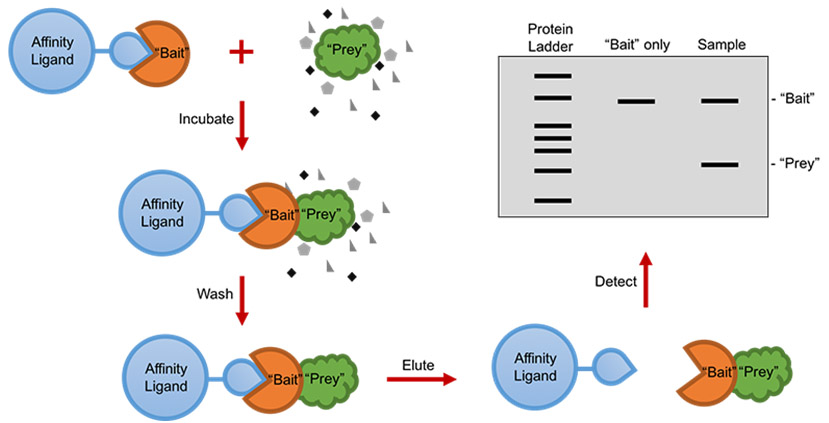
生物素可以与亲和素或者链霉亲和素有力结合,结合强度甚至接近共价键。生物素标记的肽通常用于免疫测定,组织细胞化学和基于荧光的流式细胞术。标记的抗生物素抗体也可以用来结合生物素化多肽。生物素标记常连接在赖氨酸侧链或者N末端。通常在多肽和生物素之间使用6-氨基己酸作为纽带,纽带能够灵活结合底物,并且在有空间位阻的情况下能结合地更好。专肽生物根据需求,向客户提供具有不同位点生物素标记多肽的定制合成。

专肽生物合成用于蛋白质-蛋白质相互作用研究的生物素化肽。尽管生物素可以在 N 端或 C 端引入(通过赖氨酸残基),但我们建议使用 N 端修饰,因为它成本低、成功率高、周转时间短且易于操作。因为多肽合成是从 C 端到 N 端合成的,因此,N 端修饰是 SPPS步骤的最后一步,不需要额外的特定缩合步骤。相比之下,C 端修饰需要额外的步骤,并且通常更复杂。当然,原则上生物素可以定位在任何地方。

生物素可以通过多种不同的接头或间隔物与肽分离。尽管如此,还是建议包含一个灵活的间隔物,例如 Ahx(一个 6 碳接头),以使生物素标签更加稳定或灵活。
专肽生物在 N 端或 C 端提供生物素化:生物素-N 端、赖氨酸-生物素-肽中间和赖氨酸-生物素-C 端。
专肽生物还可以使用 Ahx 接头或长碳 (LC) 接头提供生物素化:生物素-Ahx-N 末端、Lys-Ahx-生物素-肽中间、Lys-Ahx-生物素-C-末端。

(生物素结构)
示例:
GRGDS在N端和C端标记生物素的结构展示。
1、GRGDS在N端标记生物素,不增加Ahx 接头

2、GRGDS在N端标记生物素,增加一个Ahx 接头

3、GRGDS在C端标记生物素,不增加Ahx 接头

4、GRGDS在C端标记生物素,增加一个Ahx 接头。