400-998-5282
专注多肽 服务科研

PD-L1 inhibitory peptide 是一种抑制剂肽,靶向程序性细胞死亡配体 1 (PD-L1)。PD-L1 inhibitory peptide 结合 PD-L1,解除免疫抑制,恢复 T 细胞的抗肿瘤活性。PD-L1 inhibitory peptide 有望用于肿瘤的研究。
编号:568343
CAS号:1931111-41-9
单字母:
| 编号: | 568343 |
| 中文名称: | PD-L1 inhibitory peptide |
| 英文名: | PD-L1 inhibitory peptide |
| CAS号: | 1931111-41-9 |
| 三字母: | PD-L1 inhibitory peptide |
| 分子式: | C96H135N21O23S |
| 平均分子量: | 1983.3 |
| 标签: | 靶向多肽 抑制剂相关肽(Inhibitor Peptide) 现货多肽 |
PD-L1 inhibitory peptide 是一种抑制剂肽,靶向程序性细胞死亡配体 1 (PD-L1)。PD-L1 inhibitory peptide 结合 PD-L1,解除免疫抑制,恢复 T 细胞的抗肿瘤活性。PD-L1 inhibitory peptide 有望用于肿瘤的研究。
肿瘤细胞通过表达PD-L1等免疫检查点配体来规避免疫系统攻击。PD-L1与程序性死亡受体1(PD-1)的相互作用,不仅抑制细胞毒性T淋巴细胞(CTL)增殖,还能诱导肿瘤特异性T细胞凋亡,从而增强肿瘤细胞对CTL攻击的抵抗能力。目前针对这些蛋白的单克隆抗体已成功研发并获批临床应用。理论上,半衰期更短、分子量更小的肽模拟物能更有效地渗透实体瘤组织,可作为PD1/PD-L1相互作用的抑制剂。研究通过理性设计与验证,开发出一种新型肽抑制剂,旨在为当前依赖抗体的癌症免疫治疗提供可行替代方案。利用生物层析干涉法和计算机模拟对接实验发现,PD-L1肽模拟物PL120131能够通过结合PD-1来阻断PD-1/PD-L1的相互作用。研究证实PL120131能够抑制PD-1介导的凋亡信号通路,有效挽救Jurkat细胞和原代淋巴细胞免于凋亡。此外,研究还表明PL120131可增强CTL的抗肿瘤活性。在三维共培养模型中,PL120131对T细胞的共培养存活率和活性维持效果优于抗PD-1阻断抗体。综合来看,这种PD-1/PD-L1抑制肽的特性揭示了其在抑制PD-L1结合的同时保持CTL活力的双重优势,为开发替代抗体免疫疗法提供了新思路。
PD-L1肽与无效肽治疗脓毒症小鼠的Kaplan-Meier生存曲线对比(A):实线为32只接受抗PD-L1肽(化合物8)治疗的脓毒症模型小鼠的Kaplan-Meier曲线,虚线为33只接受无效肽治疗的小鼠曲线。该结果综合了三项独立生存研究的数据。在抗PD-L1肽治疗组中,32只小鼠中有19只(59.4%)存活;而在无效肽治疗组中,33只小鼠仅有10只(30.3%)存活。(B)治疗方案:通过CLP手术诱导脓毒症,并于术后第3天注射白色念珠菌。从第5天至第13天,每日三次给予3 mg/kg剂量的抗PD-L1肽或无效肽。
参考文献
Shindo Y, et al. Anti-PD-L1 peptide improves survival in sepsis[J]. Journal of Surgical Research, 2017, 208: 33-39.
Boohaker RJ, et al. Rational design and development of a peptide inhibitor for the PD-1/PD-L1 interaction. Cancer Lett. 2018 Oct 10;434:11-21
PD-L1 inhibitory peptide 是一种抑制剂肽,靶向程序性细胞死亡配体 1 (PD-L1)。PD-L1 inhibitory peptide 结合 PD-L1,解除免疫抑制,恢复 T 细胞的抗肿瘤活性。PD-L1 inhibitory peptide 有望用于肿瘤的研究。 肿瘤细胞通过表达PD-L1等免疫检查点配体来规避免疫系统攻击。PD-L1与程序性死亡受体1(PD-1)的相互作用,不仅抑制细胞毒性T淋巴细胞(CTL)增殖,还能诱导肿瘤特异性T细胞凋亡,从而增强肿瘤细胞对CTL攻击的抵抗能力。目前针对这些蛋白的单克隆抗体已成功研发并获批临床应用。理论上,半衰期更短、分子量更小的肽模拟物能更有效地渗透实体瘤组织,可作为PD1/PD-L1相互作用的抑制剂。研究通过理性设计与验证,开发出一种新型肽抑制剂,旨在为当前依赖抗体的癌症免疫治疗提供可行替代方案。利用生物层析干涉法和计算机模拟对接实验发现,PD-L1肽模拟物PL120131能够通过结合PD-1来阻断PD-1/PD-L1的相互作用。研究证实PL120131能够抑制PD-1介导的凋亡信号通路,有效挽救Jurkat细胞和原代淋巴细胞免于凋亡。此外,研究还表明PL120131可增强CTL的抗肿瘤活性。在三维共培养模型中,PL120131对T细胞的共培养存活率和活性维持效果优于抗PD-1阻断抗体。综合来看,这种PD-1/PD-L1抑制肽的特性揭示了其在抑制PD-L1结合的同时保持CTL活力的双重优势,为开发替代抗体免疫疗法提供了新思路。 PD-L1肽与无效肽治疗脓毒症小鼠的Kaplan-Meier生存曲线对比(A):实线为32只接受抗PD-L1肽(化合物8)治疗的脓毒症模型小鼠的Kaplan-Meier曲线,虚线为33只接受无效肽治疗的小鼠曲线。该结果综合了三项独立生存研究的数据。在抗PD-L1肽治疗组中,32只小鼠中有19只(59.4%)存活;而在无效肽治疗组中,33只小鼠仅有10只(30.3%)存活。(B)治疗方案:通过CLP手术诱导脓毒症,并于术后第3天注射白色念珠菌。从第5天至第13天,每日三次给予3 mg/kg剂量的抗PD-L1肽或无效肽。
靶向多肽可以根据其功能和用途分为不同的类别。在PDC(多肽偶联药物)中,靶向多肽通常被分为细胞穿透肽和细胞靶向肽两大类。
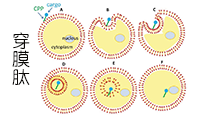
细胞穿透肽:这类多肽能够跨越细胞膜,转运具有生物活性的大分子物质,如多肽、蛋白质、核酸等化学药物,使其顺利进入细胞。一些常见的细胞穿透肽包括Pep-1、Pentratin、PepFact14、Transportan等。
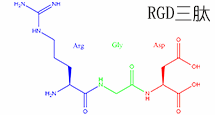
细胞靶向肽:这类多肽的作用主要是引导化学药物或生物活性分子与特定类型的细胞结合,以提高其靶向性和治疗效率。常见的细胞靶向肽包括PEGA、生长激素抑制素类似物、蛙皮素类似物、RGD肽类等。
定义
酶是用于生化反应的非常有效的催化剂。它们通过提供较低活化能的替代反应途径来加快反应速度。酶作用于底物并产生产物。一些物质降低或什至停止酶的催化活性被称为抑制剂。
发现
1965年,Umezawa H分析了微生物产生的酶抑制剂,并分离出了抑制亮肽素和抗痛药的胰蛋白酶和木瓜蛋白酶,乳糜蛋白酶抑制的胰凝乳蛋白酶,胃蛋白酶抑制素抑制胃蛋白酶,泛磷酰胺抑制唾液酸酶,乌藤酮抑制酪氨酸羟化酶,多巴汀抑制多巴胺3-羟硫基嘧啶和多巴胺3-羟色胺酶酪氨酸羟化酶和多巴胺J3-羟化酶。最近,一种替代方法已应用于预测新的抑制剂:合理的药物设计使用酶活性位点的三维结构来预测哪些分子可能是抑制剂1。已经开发了用于识别酶抑制剂的基于计算机的方法,例如分子力学和分子对接。
结构特征
已经确定了许多抑制剂的晶体结构。已经确定了三种与凝血酶复合的高效且选择性的低分子量刚性肽醛醛抑制剂的晶体结构。这三种抑制剂全部在P3位置具有一个新的内酰胺部分,而对胰蛋白酶选择性最高的两种抑制剂在P1位置具有一个与S1特异性位点结合的胍基哌啶基。凝血酶的抑制动力学从慢到快变化,而对于胰蛋白酶,抑制的动力学在所有情况下都快。根据两步机理2中稳定过渡态络合物的缓慢形成来检验动力学。
埃米尔•菲舍尔(Emil Fischer)在1894年提出,酶和底物都具有特定的互补几何形状,彼此恰好契合。这称为“锁和钥匙”模型3。丹尼尔·科什兰(Daniel Koshland)提出了诱导拟合模型,其中底物和酶是相当灵活的结构,当底物与酶4相互作用时,活性位点通过与底物的相互作用不断重塑。
在众多生物活性肽的成熟过程中,需要由其谷氨酰胺(或谷氨酰胺)前体形成N末端焦谷氨酸(pGlu)。游离形式并与底物和三种咪唑衍生抑制剂结合的人QC的结构揭示了类似于两个锌外肽酶的α/β支架,但有多个插入和缺失,特别是在活性位点区域。几种活性位点突变酶的结构分析为针对QC相关疾病5的抑制剂的合理设计提供了结构基础。
作用方式
酶是催化化学反应的蛋白质。酶与底物相互作用并将其转化为产物。抑制剂的结合可以阻止底物进入酶的活性位点和/或阻止酶催化其反应。抑制剂的种类繁多,包括:非特异性,不可逆,可逆-竞争性和非竞争性。可逆抑制剂 以非共价相互作用(例如疏水相互作用,氢键和离子键)与酶结合。非特异性抑制方法包括最终使酶的蛋白质部分变性并因此不可逆的任何物理或化学变化。特定抑制剂 对单一酶发挥作用。大多数毒药通过特异性抑制酶发挥作用。竞争性抑制剂是任何与底物的化学结构和分子几何结构非常相似的化合物。抑制剂可以在活性位点与酶相互作用,但是没有反应发生。非竞争性抑制剂是与酶相互作用但通常不在活性位点相互作用的物质。非竞争性抑制剂的净作用是改变酶的形状,从而改变活性位点,从而使底物不再能与酶相互作用而产生反应。非竞争性抑制剂通常是可逆的。不可逆抑制剂与酶形成牢固的共价键。这些抑制剂可以在活性位点附近或附近起作用。
功能
工业应用中, 酶在商业上被广泛使用,例如在洗涤剂,食品和酿造工业中。蛋白酶用于“生物”洗衣粉中,以加速蛋白质在诸如血液和鸡蛋等污渍中的分解。商业上使用酶的问题包括:它们是水溶性的,这使得它们难以回收,并且一些产物可以抑制酶的活性(反馈抑制)。
药物分子,许多药物分子都是酶抑制剂,药用酶抑制剂通常以其特异性和效力为特征。高度的特异性和效力表明该药物具有较少的副作用和较低的毒性。酶抑制剂在自然界中发现,并且也作为药理学和生物化学的一部分进行设计和生产6。
天然毒物 通常是酶抑制剂,已进化为保护植物或动物免受天敌的侵害。这些天然毒素包括一些已知最剧毒的化合物。
神经气体( 例如二异丙基氟磷酸酯(DFP))通过与丝氨酸的羟基反应生成酯,从而抑制了乙酰胆碱酯酶的活性位点。
参考
1、Scapin G (2006). Structural biology and drug discovery. Curr. Pharm. Des., 12(17):2087–2097.
2、Krishnan R, Zhang E, Hakansson K, Arni RK, Tulinsky A, Lim-Wilby MS, Levy OE, Semple JE, Brunck TK (1998). Highly selective mechanism-based thrombin inhibitors: structures of thrombin and trypsin inhibited with rigid peptidyl aldehydes. Biochemistry, 37 (35):12094-12103.
3、Fischer E (1894). Einfluss der configuration auf die wirkung der enzyme. Ber. Dt. Chem. Ges., 27:2985–2993.
4、Koshland DE (1958). Application of a theory of enzyme specificity to protein synthesis. PNAS., 44 (2):98–104.
5、Huang KF, Liu YL, Cheng WJ, Ko TP, Wang AH (2005). Crystal structures of human glutaminyl cyclase, an enzyme responsible for protein N-terminal pyroglutamate formation. PNAS., 102(37):13117-13122.
6、Holmes CF, Maynes JT, Perreault KR, Dawson JF, James MN (2002). Molecular enzymology underlying regulation of protein phosphatase-1 by natural toxins. Curr Med Chem., 9(22):1981-1989.
Definition
Enzymes are very efficient catalysts for biochemical reactions. They speed up reactions by providing an alternative reaction pathway of lower activation energy. Enzyme acts on substrate and gives rise to a product. Some substances reduce or even stop the catalytic activities of enzymes are called inhibitors.
Discovery
In 1965, Umezawa H analysed enzyme inhibitors produced by microorganisms and isolated leupeptin and antipain inhibiting trypsin and papain, chymostatin inhibiting chymotrypsin, pepstatin inhibiting pepsin, panosialin inhibiting sialidases, oudenone inhibiting tyrosine hydroxylase, dopastin inhibiting dopamine 3-hydroxylase, aquayamycin and chrothiomycin inhibiting tyrosine hydroxylase and dopamine J3-hydroxylase . Recently, an alternative approach has been applied to predict new inhibitors: rational drug design uses the three-dimensional structure of an enzyme's active site to predict which molecules might be inhibitors 1. Computer-based methods for identifying inhibitor for an enzyme have been developed, such as molecular mechanics and molecular docking.
Structural Characteristics
The crystal structures of many inhibitors have been determined. The crystal structures of three highly potent and selective low-molecular weight rigid peptidyl aldehyde inhibitors complexed with thrombin have been determined. All the three inhibitors have a novel lactam moiety at the P3 position, while the two with greatest trypsin selectivity have a guanidinopiperidyl group at the P1 position that binds in the S1 specificity site. The kinetics of inhibition vary from slow to fast with thrombin and are fast in all cases with trypsin. The kinetics are examined in terms of the slow formation of a stable transition-state complex in a two-step mechanism 2.
Emil Fischer in 1894 suggested that both the enzyme and the substrate possess specific complementary geometric shapes that fit exactly into one another.This is known as "the lock and key" model 3. Daniel Koshland suggested induced fit model where substrate and enzymes are rather flexible structures, the active site is continually reshaped by interactions with the substrate as the substrate interacts with the enzyme 4.
N-terminal pyroglutamate (pGlu) formation from its glutaminyl (or glutamyl) precursor is required in the maturation of numerous bioactive peptides. The structure of human QC in free form and bound to a substrate and three imidazole-derived inhibitors reveals an alpha/beta scaffold akin to that of two-zinc exopeptidases but with several insertions and deletions, particularly in the active-site region. The structural analyses of several active-site-mutant enzymes provide a structural basis for the rational design of inhibitors against QC-associated disorders 5.
Mode of Action
Enzymes are proteins that catalyze chemical reactions. Enzymes interact with substrate and convert them into products. Inhibitor binding can stop a substrate from entering the enzyme's active site and/or hinder the enzyme from catalyzing its reaction. There are a variety of types of inhibitors including: nonspecific, irreversible, reversible - competitive and noncompetitive. Reversible inhibitors bind to enzymes with non-covalent interactions like hydrophobic interactions, hydrogen bonds, and ionic bonds. Non-specific methods of inhibition include any physical or chemical changes which ultimately denature the protein portion of the enzyme and are therefore irreversible. Specific Inhibitors exert their effects upon a single enzyme. Most poisons work by specific inhibition of enzymes. A competitive inhibitor is any compound which closely resembles the chemical structure and molecular geometry of the substrate. The inhibitor may interact with the enzyme at the active site, but no reaction takes place. A noncompetitive inhibitor is a substance that interacts with the enzyme, but usually not at the active site. The net effect of a non competitive inhibitor is to change the shape of the enzyme and thus the active site, so that the substrate can no longer interact with the enzyme to give a reaction. Non competitive inhibitors are usually reversible. Irreversible Inhibitors form strong covalent bonds with an enzyme. These inhibitors may act at, near, or remote from the active site .
Functions
Industrial application, enzymes are widely used commercially, for example in the detergent, food and brewing industries. Protease enzymes are used in 'biological' washing powders to speed up the breakdown of proteins in stains like blood and egg. Problems using enzymes commercially include: they are water soluble which makes them hard to recover and some products can inhibit the enzyme activity (feedback inhibition) .
Drug molecules, many drug molecules are enzyme inhibitors and a medicinal enzyme inhibitor is usually characterized by its specificity and its potency. A high specificity and potency suggests that a drug will have fewer side effects and less toxic. Enzyme inhibitors are found in nature and are also designed and produced as part of pharmacology and biochemistry 6.
Natural poisons are often enzyme inhibitors that have evolved to defend a plant or animal against predators. These natural toxins include some of the most poisonous compounds known.
Nerve gases such as diisopropylfluorophosphate (DFP) inhibit the active site of acetylcholine esterase by reacting with the hydroxyl group of serine to make an ester.
References
Scapin G (2006). Structural biology and drug discovery. Curr. Pharm. Des., 12(17):2087–2097.
Krishnan R, Zhang E, Hakansson K, Arni RK, Tulinsky A, Lim-Wilby MS, Levy OE, Semple JE, Brunck TK (1998). Highly selective mechanism-based thrombin inhibitors: structures of thrombin and trypsin inhibited with rigid peptidyl aldehydes. Biochemistry, 37 (35):12094-12103.
Fischer E (1894). Einfluss der configuration auf die wirkung der enzyme. Ber. Dt. Chem. Ges., 27:2985–2993.
Koshland DE (1958). Application of a theory of enzyme specificity to protein synthesis. PNAS., 44 (2):98–104.
Huang KF, Liu YL, Cheng WJ, Ko TP, Wang AH (2005). Crystal structures of human glutaminyl cyclase, an enzyme responsible for protein N-terminal pyroglutamate formation. PNAS., 102(37):13117-13122.
Holmes CF, Maynes JT, Perreault KR, Dawson JF, James MN (2002). Molecular enzymology underlying regulation of protein phosphatase-1 by natural toxins. Curr Med Chem., 9(22):1981-1989.