
400-998-5282
专注多肽 服务科研
400-998-5282
专注多肽 服务科研

来自 Aplysia parvula 的九肽 APRLRFYSL 作为局部神经递质,作用于腹部神经节的神经元,并通过扩散到循环血淋巴中并调节其他器官的活动而作为激素。它特别会引起卵睾平滑肌的收缩和卵子的排出。
编号:172482
CAS号:87549-52-8
单字母:H2N-APRLRFYSL-OH
| 参考文献(References): | B.S. Rothman et al. PNAS, 80, 5753 (1983) |
The nonapeptide APRLRFYSL from Aplysia parvula acts as a neurotransmitter locally, upon neurons of the abdominal ganglion and as a hormone by diffusing into the circulating hemolymph and modulating the activity of other organs. It specifically causes contraction of smooth muscle in the ovotestis and expulsion of the egg string.
包囊细胞肽 (1-9) 是 N 端片段,用于探索神经肽结构与早期受体接触位点。序列含芳香族与带电残基,可用于相互作用位点定位、折叠研究与基序分析,应用领域包括神经内分泌建模与多肽工程。
Bag Cell Peptide (1-9) is an N-terminal fragment used to explore neuropeptide structure and early receptor-contact determinants. Its sequence includes aromatic and charged residues enabling interaction mapping. The peptide supports folding studies and motif analysis. Applications include neuroendocrine modeling and peptide engineering.
α- 包囊细胞肽是一种软体动物神经肽,用于解析生殖调控相关信号事件,可研究受体亲和力与多肽构象特征,定位神经内分泌通路中的功能基序,揭示早期分化神经肽家族的进化规律。
Alpha-bag cell peptide is a molluscan neuropeptide used to examine signaling events associated with reproductive modulation. Its structure supports investigation of receptor affinity and peptide conformational behavior. Researchers employ it to map functional motifs in neuroendocrine pathways. The molecule contributes to understanding early-diverging peptide families.
α 袋细胞肽(1-9)是软体动物袋细胞的 N 端神经肽片段,用于研究生殖和神经调节信号传导。其结构支持受体亲和力和肽结构转变的分析。研究人员检查它以绘制最小功能基序。该分子有助于袋细胞肽的比较评估。
α Bag Cell Peptide (1-9) is an N-terminal neuropeptide fragment from molluscan bag cells, used to study reproductive and neuromodulatory signaling. Its structure supports analysis of receptor affinity and peptide structural transitions. Researchers examine it to map minimal functional motifs. The molecule contributes to comparative evaluations of bag cell peptides.
Definition
Bag cell peptides (BCPs) are a class of small neuropeptides secreted by the bag cell neurons in the marine mollusk Aplysia1. They trigger a series of reproductive behavior in this mollusk that finally culminates in egg-laying1.
Discovery
BCPs were originally identified in the bag cell extracts of abdominal ganglion of mature Aplysia that were obtained in Venice, CA2. They were isolated based on their ability to cause bag cell excitation2.
Classification
Bag cell specific gene that encodes for the precursor form of the egg laying hormone also contains sequences that encode several small BCPs: a-BCP, b-BCP, g-BCP2, d-BCP3,4 and e-BCP5.
Structural Characteristics
a-BCP is a 9 amino acid (Ala-Pro-Arg-Leu-Arg-Phe-Tyr-Ser-Leu) neuro tramsmitter whose Phe6-Tyr7 is necessary and sufficient for its function6. It does not undergo any NH2 or COOH modifications. b-BCP (Arg-Leu-Arg-Phe-His)7 and g-BCP are five amino acid peptides while d-BCP and e-BCP contain 39 and 19 amino acid residues respectively5.
Mode of action
Excitation of Bag Cell neurons triggers an afterdischarge response that results in the secretion of BCPs8. In addition, once the afterdischarge is underway, peptide release occurs in response to both calcium influx from the extracellular space and calcium release from intracellular stores8. Upon secretion the BCPs are packaged into discrete vesicles that are distributed throughout the central nervous system of Aplysia where they exert their functions4.
Functions
Release of egg-laying hormone and BCPs mediates the egg laying behavior in Aplysia4. Egg laying behavior is a result of several neuronal responses that include burst augmentation of cell R15, prolonged excitation of left lower quadrant neurons and inhibition of left upper quadrant neurons. BCPs have several functions in the bag cells2. a-BCP inhibits the left upper quadrant cells, b-BCP excites L1, R1 and bag cells in the abdominal ganglion of Aplysia, g-BCP excites bag cells and d-BCP stimulates calcium release from the mitochondria5. This elecrophysiological changes to the bag cells by the BCPs and other hormones culminates in egg-laying.
References
1. Rothman BS, Weir G, Dudek FE (1983a). Egg-laying hormone: direct action on the ovitestis Aplysia. Gen Comp Endocrinol, 52,134-141.
2. Rothman BS, Mayeri E, Brown RO, Yuan PM, Shively JE (1983b). Primary structure and neuronal effects of alpha-bag cell peptide, a second candidate neurotransmitter encoded by a single gene in bag cell neurons of Aplysia. Proc Natl Acad Sci, 80, 5753-5757.
3. Fisher JM, Sossin W, Newcomb R, Scheller RH (1988). Multiple neuropeptides derived from a common precursor are differentially packaged and transported. Cell, 54,813-822.
4. Hatcher NG, Sweedler JV (2008). Aplysia bag cells function as a distributed neurosecretory network. J. Neurophysiol.. 99, 333-343.
5. Gregg TN, Sherry DP, and James EB (1989). The Egg-Laying Hormone Family: Precursors, Products, and Functions. Bio Bull, 177, 210-217.
6. Owens DF, Menon JG, Rotham BS (1992). Structure-activity relationship of the neurotransmitter alpha-bag cell peptide on aplysia LUQ neurons: implications regarding its inactivation in the extra cellular space. J of Neurobiology, 6, 650-70.
7. Rothman BS, Dekruyfft S, Talebian SM, Menon JG, Squire CR, Yehll CH, and Lee TD (1992). Aplysia Peptide Neurotransmitters & Bag Cell Peptide, Phe-Met-Arg-Phe- amide, and Small Cardioexcitatory Peptide B Are Rapid Degraded by a Leucine Aminopeptidase-like Activity in Hemolymph, J Biol. Chem., 287, 35, 25135-140.
8. Karen JL, Ronald JK, John AC and Leonard KK (2004). Hyperosmotic media inhibit voltage-dependent calcium influx and peptide release in Aplysia neurons, J Memb. Biol., Vol 128, 41-52.
| DOI | 名称 | |
|---|---|---|
| 10.1073/pnas.80.18.5753 | Primary structure and neuronal effects of alpha-bag cell peptide, a second candidate neurotransmitter encoded by a single gene in bag cell neurons of Aplysia | 下载 |
| 10.1523/JNEUROSCI.06-03-00803.1986 | The bag cells of Aplysia as a multitransmitter system: identification of alpha bag cell peptide as a second neurotransmitter | 下载 |
| 10.1016/0196-9781(94)90042-6 | Determinants of potency and temperature-dependent function in the Aplysia bag cell peptides | 下载 |
多肽H2N-Ala-Pro-Arg-Leu-Arg-Phe-Tyr-Ser-Leu-COOH的合成步骤:
1、合成CTC树脂:称取2.26g CTC Resin(如初始取代度约为0.43mmol/g)和1.17mmol Fmoc-Leu-OH于反应器中,加入适量DCM溶解氨基酸(需要注意,此时CTC树脂体积会增大好几倍,避免DCM溶液过少),再加入2.92mmol DIPEA(Mw:129.1,d:0.740g/ml),反应2-3小时后,可不抽滤溶液,直接加入1ml的HPLC级甲醇,封端半小时。依次用DMF洗涤2次,甲醇洗涤1次,DCM洗涤一次,甲醇洗涤一次,DCM洗涤一次,DMF洗涤2次(这里使用甲醇和DCM交替洗涤,是为了更好地去除其他溶质,有利于后续反应)。得到 Fmoc-Leu-CTC Resin。结构图如下:

2、脱Fmoc:加3倍树脂体积的20%Pip/DMF溶液,鼓氮气30分钟,然后2倍树脂体积的DMF 洗涤5次。得到 H2N-Leu-CTC Resin 。(此步骤脱除Fmoc基团,茚三酮检测为蓝色,Pip为哌啶)。结构图如下:

3、缩合:取2.92mmol Fmoc-Ser(tBu)-OH 氨基酸,加入到上述树脂里,加适当DMF溶解氨基酸,再依次加入5.83mmol DIPEA,2.77mmol HBTU。反应30分钟后,取小样洗涤,茚三酮检测为无色。用2倍树脂体积的DMF 洗涤3次树脂。(洗涤树脂,去掉残留溶剂,为下一步反应做准备)。得到Fmoc-Ser(tBu)-Leu-CTC Resin。氨基酸:DIPEA:HBTU:树脂=3:6:2.85:1(摩尔比)。结构图如下:

4、依次循环步骤二、步骤三,依次得到
H2N-Ser(tBu)-Leu-CTC Resin
Fmoc-Tyr(tBu)-Ser(tBu)-Leu-CTC Resin
H2N-Tyr(tBu)-Ser(tBu)-Leu-CTC Resin
Fmoc-Phe-Tyr(tBu)-Ser(tBu)-Leu-CTC Resin
H2N-Phe-Tyr(tBu)-Ser(tBu)-Leu-CTC Resin
Fmoc-Arg(Pbf)-Phe-Tyr(tBu)-Ser(tBu)-Leu-CTC Resin
H2N-Arg(Pbf)-Phe-Tyr(tBu)-Ser(tBu)-Leu-CTC Resin
Fmoc-Leu-Arg(Pbf)-Phe-Tyr(tBu)-Ser(tBu)-Leu-CTC Resin
H2N-Leu-Arg(Pbf)-Phe-Tyr(tBu)-Ser(tBu)-Leu-CTC Resin
Fmoc-Arg(Pbf)-Leu-Arg(Pbf)-Phe-Tyr(tBu)-Ser(tBu)-Leu-CTC Resin
H2N-Arg(Pbf)-Leu-Arg(Pbf)-Phe-Tyr(tBu)-Ser(tBu)-Leu-CTC Resin
Fmoc-Pro-Arg(Pbf)-Leu-Arg(Pbf)-Phe-Tyr(tBu)-Ser(tBu)-Leu-CTC Resin
H2N-Pro-Arg(Pbf)-Leu-Arg(Pbf)-Phe-Tyr(tBu)-Ser(tBu)-Leu-CTC Resin
Fmoc-Ala-Pro-Arg(Pbf)-Leu-Arg(Pbf)-Phe-Tyr(tBu)-Ser(tBu)-Leu-CTC Resin
以上中间结构,均可在专肽生物多肽计算器-多肽结构计算器中,一键画出。
最后再经过步骤二得到 H2N-Ala-Pro-Arg(Pbf)-Leu-Arg(Pbf)-Phe-Tyr(tBu)-Ser(tBu)-Leu-CTC Resin,结构如下:

5、切割:6倍树脂体积的切割液(或每1g树脂加8ml左右的切割液),摇床摇晃 2小时,过滤掉树脂,用冰无水乙醚沉淀滤液,并用冰无水乙醚洗涤沉淀物3次,最后将沉淀物放真空干燥釜中,常温干燥24小试,得到粗品H2N-Ala-Pro-Arg-Leu-Arg-Phe-Tyr-Ser-Leu-COOH。结构图见产品结构图。
切割液选择:1)TFA:H2O=95%:5%、TFA:H2O=97.5%:2.5%
2)TFA:H2O:TIS=95%:2.5%:2.5%
3)三氟乙酸:茴香硫醚:1,2-乙二硫醇:苯酚:水=87.5%:5%:2.5%:2.5%:2.5%
(前两种适合没有容易氧化的氨基酸,例如Trp、Cys、Met。第三种适合几乎所有的序列。)
6、纯化冻干:使用液相色谱纯化,收集目标峰液体,进行冻干,获得蓬松的粉末状固体多肽。不过这时要取小样复测下纯度 是否目标纯度。
7、最后总结:
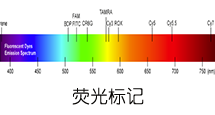
杭州专肽生物技术有限公司(ALLPEPTIDE https://www.allpeptide.com)主营定制多肽合成业务,提供各类长肽,短肽,环肽,提供各类修饰肽,如:荧光标记修饰(CY3、CY5、CY5.5、CY7、FAM、FITC、Rhodamine B、TAMRA等),功能基团修饰肽(叠氮、炔基、DBCO、DOTA、NOTA等),同位素标记肽(N15、C13),订书肽(Stapled Peptide),脂肪酸修饰肽(Pal、Myr、Ste),磷酸化修饰肽(P-Ser、P-Thr、P-Tyr),环肽(酰胺键环肽、一对或者多对二硫键环),生物素标记肽,PEG修饰肽,甲基化修饰肽
以上所有内容,为专肽生物原创内容,请勿发布到其他网站上。