
400-998-5282
专注多肽 服务科研
400-998-5282
专注多肽 服务科研

Substance P (Neurokinin P) 是一种神经肽,在中枢神经系统中作为神经递质和神经调节剂。
编号:135866
CAS号:33507-63-0/148470-19-3
单字母:H2N-RPKPQQFFGLM-CONH2
| 参考文献(References): | A.I. Roberts et al., Cell Immunol., 141, 457 (1992) |
Substance P (Neurokinin P) 是一种神经肽,在中枢神经系统中作为神经递质和神经调节剂。Substance P 的内源性受体是神经激肽1受体 (neurokinin 1 receptor,NK1R)。
Substance P (Neurokinin P) is a neuropeptide, acting as a neurotransmitter and as a neuromodulator in the CNS. The endogenous receptor for substance P is neurokinin 1 receptor (NK1-receptor, NK1R).
P物质(SP)是一种重要的神经肽,属于速激肽家族。它充当神经递质和神经调节剂。它与神经激肽A密切相关,两者都起源于相同的前体前体原胰凝乳蛋白酶A。它从感觉神经末梢释放,参与炎症和疼痛过程。
Substance P (SP) is an important neuropeptide belonging to the tachykinin family. It acts as a neurotransmitter and neuromodulator. It is closely related to neurokinin A, both originating from the same precursor preprotachykinin A. It is released from the terminals of sensory nerves and is involved in inflammation and pain processes.
P物质是速激肽神经肽家族的成员,该家族在中枢神经系统(CNS)中产生,并通过其特异性受体神经激肽1受体(NK-1R)发挥作用。NK-1R存在于神经元和胶质细胞类型中。P物质作为神经递质参与疼痛感知;调节肠道运动;加剧肺部、胃肠道和皮肤的炎症以及神经炎症。有趣的是,在炎症性肠病中,P物质的水平会升高,并且通过参与细胞因子的释放,它对哮喘的病理过程有所贡献。这些多样的功能使P物质成为治疗研究的靶点。该产品以0.5毫克小瓶装的形式提供。
Substance P is a member of the tachykinin neuropeptide family which is produced in the central nervous system (CNS) and acts through its specific receptor neurokinin 1 receptor (NK-1R). NK-1R is present in neurons and on glial cell types. Substance P is involved in: pain perceptions as a neurotransmitter; gut motility; increased inflammation in the lungs, gastrointestinal tract and the skin and neuroinflammation. Interestingly the levels of Substance P are raised in inflammatory bowel diseases and through its involvement in cytokine release, it contributes to asthma pathology. These diverse selection of functions makes substance P a target for therapeutic research. This product is available as a 0.5 mg vial.
这种神经肽存在于肠道和大脑中。它对中枢和外周神经元产生多种兴奋性作用。它能收缩平滑肌、收缩细支气管并增加毛细血管通透性。当它从传入神经释放时,会引起神经源性炎症反应,包括肥大细胞脱颗粒。
This neuropeptide was found in the gut as well as in the brain. It is responsible for a number of excitatory effects on both central and peripheral neurons. It contracts smooth muscle, constricts bronchioles and increases capillary permeability. When released from afferent nerves, it causes a neurogenic inflammatory response, including mast cell degranulation.
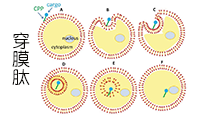
Substance P TFA (Neurokinin P TFA) 是一种神经肽,在中枢神经系统中作为神经递质和神经调节剂。Substance P 的内源性受体是神经激肽1受体 (neurokinin 1 receptor,NK1R)。 体外研究: 由神经激肽 1 受体 (NK1-R) 介导的神经肽物质 P (SP) 脱敏和再敏化,这可能与 NK1-R 的内吞作用和再循环有关。SP 和 NK1-R 被内化到相同的网格蛋白免疫反应性囊泡中,然后分类到不同的隔间中。SP 在细胞表面和早期核内体中是完整的,但在核周囊泡中缓慢降解。SP 诱导 NK1-R 的网格蛋白依赖性内化。SP/NK1-R 复合物在酸化的核内体中解离。SP 被降解,而 NK1-R 循环到细胞表面。SP 在转染的上皮细胞中诱导 NK1-R 的内化[1]。
| DOI | 名称 | |
|---|---|---|
| 10.1111/cpr.12527 | MiR-34b/c-5p and the neurokinin-1 receptor regulate breast cancer cell proliferation and apoptosis | 下载 |
| 10.1091/mbc.6.5.509 | Delineation of the endocytic pathway of substance P and its seven-transmembrane domain NK1 receptor | 下载 |




sales@allpeptide.com